
Rise of Casual sports in India
Published June 23, 2026
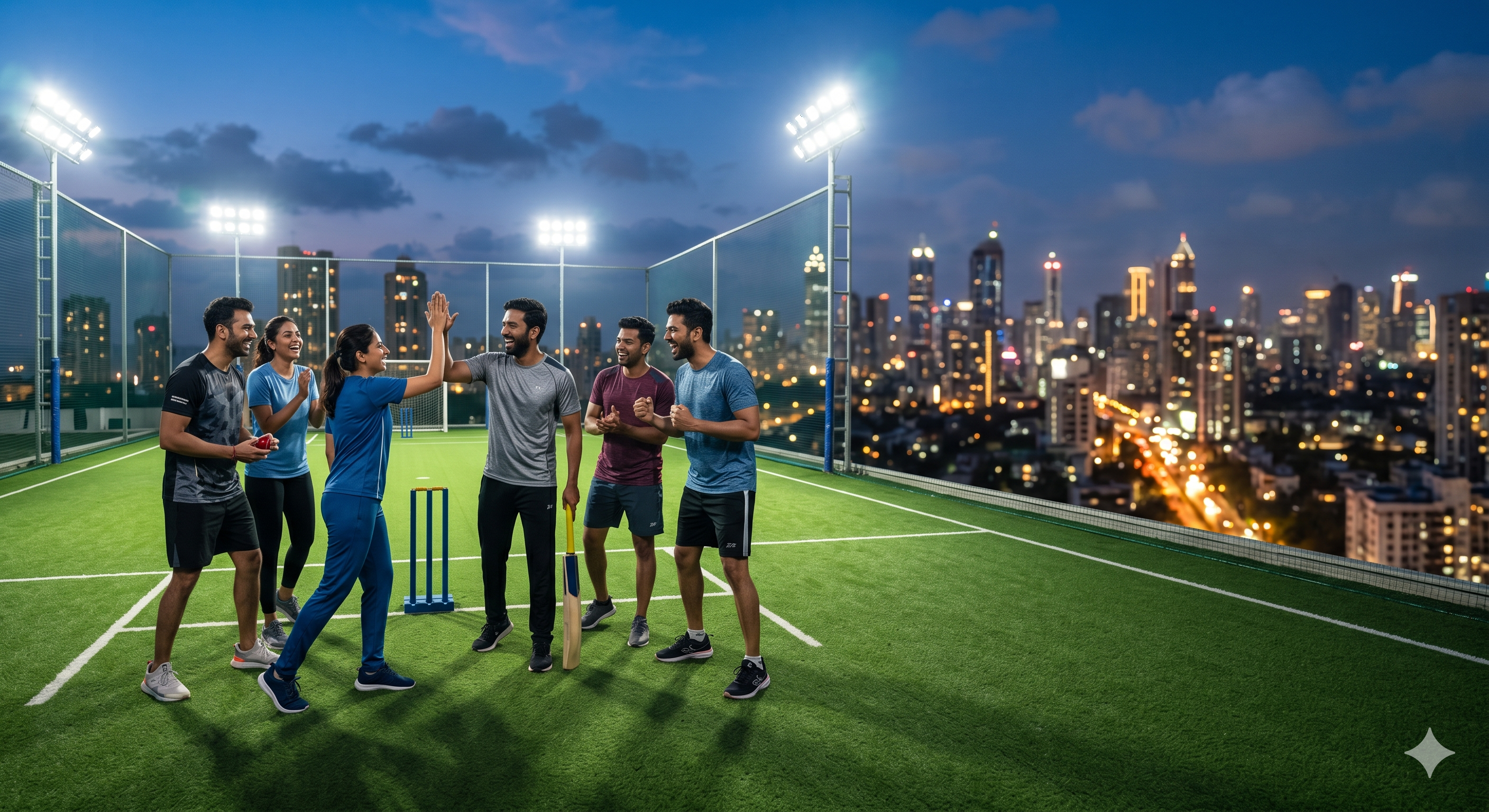
Discover how casual sports in India are transforming the nation's health and social landscape. From turf football to box cricket, explore the multi-million dollar recreational sports culture boom
The Explosive Rise of Casual Sports in India
For decades, India’s relationship with sports was primarily passive. Millions of people huddled around television screens or smartphones, passionately cheering for the national cricket team or tracking Olympic heroes. When it came to actual participation, sports were traditionally viewed through a binary lens: either you were a professional athlete training rigorously, or you were a child playing in a local alley until academic responsibilities took over. For the average working adult, sports ceased to exist after high school or college.
However, a quiet yet massive revolution is sweeping across urban and semi-urban landscapes. Today, on any given weekday evening or weekend morning, thousands of working professionals, IT executives, homemakers, and older adults are lacing up their sneakers. They aren't training for tournaments; they are heading to floodlit turf arenas, indoor badminton courts, and specialized complexes to play. The culture of casual sports in India is experiencing an unprecedented surge, transforming from a niche weekend hobby into a mainstream lifestyle and multi-million-dollar industry.
The Transformation of India’s Fitness Trends The skyrocketing popularity of recreational sports is deeply intertwined with changing fitness trends in India. Historically, the urban middle class associated adult physical fitness almost exclusively with the gym. The early 2000s saw a massive boom in gym memberships, driven by a desire for weight loss and muscle building. However, the monotony of treadmills and stationary bicycles left many feeling uninspired, leading to high drop-out rates.
Modern consumers are seeking holistic well-being rather than just aesthetic goals. They want physical activity that stimulates the mind, builds social connections, and breaks the daily monotony of desk jobs. Casual sports offer exactly that—the perfect synthesis of high-intensity interval training (HIIT) and gamified entertainment. Playing a one-hour game of turf football or fast-paced box cricket burns comparable calories to a grueling gym session, but with far higher psychological engagement and enjoyment.
The COVID-19 pandemic acted as a major catalyst for this shift. It exposed the vulnerabilities of sedentary lifestyles and created a profound collective desire for community and outdoor spaces. When lockdowns lifted, people did not just want to be healthy; they wanted to reconnect with others, making casual sports the perfect vehicle for social fitness.
The Infrastructure Boom: Fulfilling the Supply Gap One of the biggest historical bottlenecks to adult sports participation in India was the severe lack of public infrastructure. Open spaces were scarce, and school or club grounds were fiercely guarded or poorly maintained. The birth of private, commercial sports infrastructure completely altered this dynamic.
Entrepreneurs recognized the massive supply-demand gap and began converting vacant commercial plots, warehouse spaces, and rooftop real estate into state-of-the-art sports facilities. High-quality synthetic turf for football and cricket, coupled with professional-grade wooden or synthetic mats for badminton, suddenly became accessible to the general public.
Cities like Bengaluru, Mumbai, Delhi-NCR, Hyderabad, and Chennai have seen an exponential rise in these setups. A simple search for turf football booking in any major metropolitan area now reveals hundreds of available slots, active even at midnight. These facilities provide clean changing rooms, equipment rentals, showers, and floodlights, lowering the barrier to entry and ensuring that busy professionals can play at their convenience.
Technology and App-Based Communities: The Enablers While infrastructure provided the physical spaces, technology became the connective tissue that built adult sports communities. In the past, playing a sport required organizing a group of exactly 10 to 14 reliable friends—a logistical nightmare for working adults with conflicting schedules.
Today, digital platforms have completely democratized access. Mobile applications allow individuals to discover sports venues near them, check real-time availability, and book slots instantly. More importantly, these apps feature "playmate discovery" mechanisms. If an individual wants to play badminton on a Tuesday evening but has no partner, they can join an existing open game hosted by strangers matching their skill level.
This tech-driven accessibility has converted an isolated desire into a thriving ecosystem. It has enabled thousands of migrants in corporate hubs to instantly find social circles centered around shared sporting interests, acting as an antidote to urban loneliness.
Corporate Culture and Social Bridging The corporate sector has also played a pivotal role in accelerating the recreational sports culture. Traditional corporate mixers—often centered around heavy dinners and drinking—are gradually being replaced or supplemented by active engagement. Companies are regularly organizing internal corporate leagues, inter-departmental turf tournaments, and weekend sports retreats.
Sports serve as a phenomenal equalizer. On a cricket turf or a basketball court, corporate hierarchies dissolve. A junior developer can bowl out a senior vice president, fostering open communication, mutual respect, and genuine team bonding that a boardroom can rarely achieve. Furthermore, adults are utilizing casual sports clubs as alternative networking hubs, preferring to strike business conversations over a game of tennis or padel rather than a formal meeting.
Economic Impact of the Wellness Revolution in India The rise of casual sports is not just a social phenomenon; it is a massive economic engine driving the broader wellness revolution in India. This shift has unlocked diverse revenue streams:
Sportswear and Gear: The demand for amateur-grade yet high-quality athletic apparel, specialized shoes, and equipment (rackets, bats, protective gear) has skyrocketed. Global brands and homegrown D2C startups are thriving by catering specifically to the recreational athlete.
New Sporting Varieties: The market is successfully introducing international concepts like Padel and Pickleball. Because of their lower learning curves compared to traditional tennis, these sports are scaling rapidly across Indian premium clubs and public centers.
Coaching for Adults: There is a growing trend of "adult academies" where individuals in their 30s and 40s hire personal coaches to learn a sport from scratch or refine their technique, treating sports instruction as a premium leisure expense.
Conclusion: A Fitter, More Active India The rise of casual sports in India signals a profound structural transformation in the country’s cultural fabric. It marks the transition of a society that is moving away from purely passive entertainment toward active, participatory health. By blending physical fitness, mental relief, and community building, recreational sports have provided a sustainable answer to the modern urban lifestyle crisis.
As digital connectivity deepens and infrastructure expands into Tier-2 and Tier-3 cities, this movement will only gain momentum. India is firmly on its path to transforming from a sports-viewing nation into a sports-playing nation—one casual weekend game at a time.